
Blog Update
What the heck does kidney donation/swaps have to do with investing. Well, all investing is an exchange just as a kidney swap is an exchange. This will be my biggest trade.
The writer will be donating a kidney to a person in dire need.
Three-minute Video on kidney donations and transplants:http://www.youtube.com/watch?v=gusncb4G2Hk
So blogging will be intermittent until a transplant is done. The goal is to finish the section on Competition Demystified, then perhaps focus on valuation, especially how to value growth. But first, I will ask readers where they want to go next on the learning journey. I won’t forget to post on problems like LXK–but all in good time.
Until then be rational, calm and reflective in these turbulent times.
Living donors
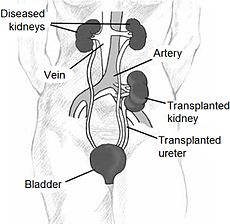
More than one in three donations in the UK is now from a live donor[6] and almost one in three in Israel.[7] The percentage of transplants from living donors is increasing. Potential donors are carefully evaluated on medical and psychological grounds. This ensures that the donor is fit for surgery and has no disease which brings undue risk or likelihood of a poor outcome for either the donor or recipient. The psychological assessment is to ensure the donor gives informed consent and is not coerced. In countries where paying for organs is illegal, the authorities may also seek to ensure that a donation has not resulted from a financial transaction. In the UK, the Human Tissue Act 2004 (HTA) dictated that donors must prove a familiar or long-term relationship or enduring friendship, for instance by providing photographs of themselves together spread over a period of time or a birth or wedding certificate. Purely altruistic donation to strangers has recently been accepted by the Human Tissue Authority in the United Kingdom, but as of December 2007 only four people had been given permission to do this under the HTA. The decision must be approved by a panel, whereas the typical donation based on relationship is required only to go through an executive.[8] There is good evidence that kidney donation is not associated with long-term harm to the donor.[9] In some cases of male living donors a hydrocele may occur in the scrotum related to the side of the nephrectomy. As an example, a living donor who had a left side laproscopic nephrectomy, the left side of the scrotum can develop a hydrocele that envelopes the left testicle and enlargens the left side of the scrotum. This condition is typically non threatening and can disappear over time. So called “daisy chain” transplants in the US involve one altruistic donor who donates a kidney to someone who has a family member willing to donate, who isn’t a match. That family member then donates to a recipient who is a match. This “chain” can be continued with several more pairs of donors/recipients.[10]
Traditionally, the donor procedure has been through a single incision of 4–7 inches (10–18 cm), but live donation is being increasingly performed by laparoscopic surgery. This reduces pain and accelerates recovery for the donor. Operative time and complications decreased significantly after a surgeon performed 150 cases. Live donor kidney grafts have higher long-term success rates than those from deceased donors.[11] Since the increase in the use of laparoscopic surgery, the number of live donors has increased. Any advance which leads to a decrease in pain and scarring and swifter recovery has the potential to boost donor numbers. In January 2009, the first all-robotic kidney transplant was performed at Saint Barnabas Medical Center through a two-inch incision. In the following six months, the same team performed eight more robotic-assisted transplants.[12]
In 2004 the FDA approved the Cedars-Sinai High Dose IVIG therapy which reduces the need for the living donor to be the same blood type (ABO compatible) or even a tissue match.[13][14] The therapy reduced the incidence of the recipient’s immune system rejecting the donated kidney in highly sensitized patients.[14]
In 2009 at the Johns Hopkins Medical Center, a healthy kidney was removed through the donor’s vagina. Vaginal donations promise to speed recovery and reduce scarring.[15] The first donor was chosen as she had previously had a hysterectomy.[16] The extraction was performed using natural orifice transluminal endoscopic surgery, where an endoscope is inserted through an orifice, then through an internal incision, so that there is no external scar. The recent advance of single port laparoscopy requiring only one entry point at the navel is another advance with potential for more frequent use.
Organ trade
In the developing world some people sell their organs. Such people are often in grave poverty[17] or are exploited by salespersons. The people who travel to make use of these kidneys are often known as “transplant tourists.” This practice is opposed by a variety of human rights groups, including Organs Watch, a group established by medical anthropologists, which was instrumental in exposing illegal international organ selling rings. These patients may have increased complications owing to poor infection control and lower medical and surgical standards. One surgeon has said that organ trade could be legalized in the UK to prevent such tourism, but this is not seen by the National Kidney Research Fund as the answer to a deficit in donors.[18]


Hi John,
Hope everything goes smoothly for you and the recipient. Do take care of your health after the operation and don’t overtax yourself … especially with blogging.
Best rgds
John, I am at a loss for words. This goes beyond mere altruism. Good luck with everything. Sid
Ditto from me. Maximum respect.
John, all the very best of luck and take it easy…some things are more important than investing!
Thanks. I will still be working and blogging but posts will be intermittant for awhile due to medical testing (I must pass rigorous medical and MENTAL tests to be able to donate). Then, depending on the recipient, the operation can occur at an unforeseen time. I just don’t know my schedule.
But visit a dialysis center (Da Vita–a public company is a big provider) and you will know that giving up a kidney is not a big deal compared to saving a life or reducing suffering. We don’t give parades for mothers who don’t drown their children. I should have died when I was 22 in a plane crash (the Cessna just made it over a line of trees during a faulty takeoff. Then another time climbing a bolder gave way and missed hitting me, so I gotta pay back my good fortune.
The market has been around for centuries. It will be there tomorrow.
Good luck and I hope it goes well for you both!
True Hero!!!
John…you are an angel!!! In the USA, the dialysis clinics are suppose to tell their patients about transplants…an obvious conflict of interest.
John, you’re a better man than me! Well done!
Absolutely amazing John, good luck.
John, I both admire and envy you: your psychic rewards will be immeasurable! A superb investment.
Thanks. First I have to be tested for mental and physical fitness for the operation. Then I will need to be accepted as a donor and finally, there must be a match. But this post is to help people understand the options out there for helping. However, as a Libertarian, whether I donate or not–the act doesn’t make me more moral than those who choose not to donate–it is just my choice.
John, just wanted to wish you both a speedy recovery. Much respect for your decision to help out another person in such a fashion.
John,
Except for the possible connotations of “admire” I didn’t mean to imply a moral judgment; except I would, as I suspect you would, feel that humanity is better off with ‘investors’ like you. But the return to you is what I envied.
Right up to when I was diagnosed with Hodgkin’s 22 years ago I used to give O-negative blood as often as they would take it, which was every six months or so.
Dear Arthur: Thanks for the kind words.
Good on you John Chew, from Downunder!
An Australian experience FYI: Two years ago, I donated a left kidney to my adult daughter (who had less than 10% renal function following sepsis). My age was 68 years. Laproscopic procedure used (“keyhole surgery”). Operation was a breeze. Was equipped with a “morphine pump” to self-administer “on demand” for pain but did not need it once. Took a few pain killers orally while in hospital but not many. Some discomfort rolling over in bed to change position, but no real “pain” to speak of. Walking around the ward by day two. Home by day four. They gave me a bucket of painkillers to take home. Hardly needed them. Probably took about eight over a week or so. Was chopping wood for internal combustion heating system by week six. Recipient has done really well. Resumed normal life, taking kid swimming, hiking, partying etc. Close match was a real boon. Anti-rejection drugs have been reduced dramatically, in steps. No moon face in the recipient, which for a woman, is important. Some weight gain, now better controlled with lower medication regime. Only side effect in the donor (me!) was a hydrocele developed on the side where the kidney was taken. Slight swelling around the wound site seemed to move down towards the groin region as it diminished. Slight enlargment of scrotum after about two to three months was noted. Grew progressively larger until it reached “nuisance” size. Some Internet info suggests a hydrocele incidence rate of 0.3% following nephrectomy. Pretty low. Just bad luck. Took medical advice. Surgical intervention recommended. Declined this. Why bother? It’s not a big problem and perhaps it may resolve. May try cold compresses. May try hyperbaric treatment. May try aspiration (removal by needle). Surgery only if enlargement becomes totally embarrassing or complications set in. A small price to pay for a daughter who can now work, play, raise her kid and have a happy family life without constant dialysis.
Apart from the hydrocele, which is really but a small problem, I have felt one hundred percent normal. I just can’t detect any difference in the way I feel or act. That surprised me. I knew my creatinine levels (and a few other blood & urine readings) would be a little higher with only a single kidney operating. So I thought there might be a slight “hang-over” feeling sometimes. But no! I just can’t point to one single instance of not feeling exactly the same.
If you are considering donating, it’s a good thing to do, with low risk and only minimal rare side effects for the donor. If you are up to 70 years of age, consider that it’s usually the heart or the brain that takes people out. The kidney plugs on if you are healthy, sometimes to age 110 and even 120! So an “old” kidney from someone up to 70 years of age can still give good service to a transplant recipient for maybe a minimum of ten years and up to 30 years! Possibly even more! Longest surviving transplant kidney I have heard of is 31 years. So far! Best to take the oldest viable kidney in the family first as that “saves” the kidneys of the younger family members for possible transplant later, if and when needed. Backups! And by then, infusion of stem cells into and around installed kidneys may make them seem “self” to the immune system, so rejections may be a thing of the past.
Another reason to take the oldest family member first is that they’ve probably had a full life and their kids have grown up and left home, so in the rare event of loss of a donor’s life, there’s minimum impact on the family and everyone can just sigh and say, ‘Oh well, he/she was doing a good thing, and they had a good innings.” Lol! That’s how I saw it, anyway.
One good thing about a renal crisis in the family is, you learn a lot about the human body and start to respect it more rigorously with proper diet and habits. Yes? No smoking folks! Only one glass of red wine a day eh? And get that SUGAR out of your diet. Grow your own food as much as possible. Don’t eat “commercial” meat injected with hormones either! Buy meat and eggs from happy free-range animals. No stress hormones in them or growth hormones either. Watch for other chemicals (artificially yellowed yolks for example.) All this more expensive? Then buy less and grow some of your own veges! Try to be vegetarian as much as you can. Avoid chemically treated fruit and vegetables used to extend shelf life (and shorten yours!). And remember, the supermarkets are trying to kill us in their quest for processed food profits and to “feed” their wealthy share-holders. More exercise too. You need all the good things…
Good luck to all of you! And to John Chew and his recipient.
Thanks Sean from Australia:
I and the recipient are doing fine.
Donating a kidney is a commitment but a tiny price for a huge reward–you save a life.